Showing posts with label Caribbean getaways. Show all posts

Thursday, October 30, 2014

REPOST: Cool in the Caribbean: Nevis is an unspoiled island getaway

Adam Licudi of Express.co.uk writes about Nevis, a beautiful Caribbean island that isn't packing with tourists. Read more about what makes the island so special below.


Montpelier is a world away from real life | Image Source: express.co.uk

Perhaps because it takes a bit more than a hop, skip and a jump to get there, the Caribbean island of Nevis remains gloriously unspoiled and off the tourist map.

My journey involved trains, planes and automobiles plus a water taxi to get across The Narrows, a two-mile stretch of water that separates it from St Kitts. This only added to the sense of anticipation that I was going somewhere special.

It is rare that a hotel has such an ambience. Set on a former 300-year-old sugar plantation it is colonial in style but not in attitude.

With 19 stylish rooms, decked out with dark wood floors, four-poster beds and Egyptian cotton linen, it certainly feels very intimate.

Sitting at 750 feet above the Caribbean in the foothills of Nevis Peak, Princess Diana chose Montpelier for its seclusion when she stayed for New Year with the young princes, then aged 10 and six, shortly after her separation from Prince Charles in 1992.

Montpelier actually has its own private beach, which is a 15-minute drive in the courtesy minibus and which I loved spending time at.

Once there I was well looked after, changing in one of the private cabanas, having a refreshing cocktail from the beach bar and tucking into my picnic packed by the hotel.

I watched prehistoric-looking black pelicans skimming the water then rising high before plunging into the sea to make their catch.

After a few days relaxing on the beach I was ready to explore and drove the circular road round the island. There are hardly any cars, so few, in fact, that there aren’t any traffic lights.

I was keen to go in search of a little of the island’s history so I took in a trio of fascinating historic sights.

Now a government building, The Bath Hotel, which opened in 1778, was where visitors were first lured by the curative powers of the volcanic springs (which reach 41C) ABTA No: V0211 that fl ow just below it. I also saw worshippers in their Sunday best

at the 17th-century St Thomas Anglican Church and the Hermitage guesthouse. Made of lignum vitae wood, the latter has survived every hurricane for more than 300 years.

For a little island that measures 36 square miles Nevis has a remarkable, if chequered, history.

Island expert Lynnell Liburd told me how Alexander Hamilton lived next door to the slave market in the capital Charlestown, himself an illegitimate outcast who was eventually sponsored by his community to go to America after being orphaned at the age of 11, and became one of that country’s founding fathers.

Nevis is a classic Carribean island without the crowds | Image Source: express.co.uk

Perhaps because it takes a bit more than a hop, skip and a jump to get there, the Caribbean island of Nevis remains gloriously unspoiled and off the tourist map.

My journey involved trains, planes and automobiles plus a water taxi to get across The Narrows, a two-mile stretch of water that separates it from St Kitts. This only added to the sense of anticipation that I was going somewhere special.

It is rare that a hotel has such an ambience. Set on a former 300-year-old sugar plantation it is colonial in style but not in attitude.

With 19 stylish rooms, decked out with dark wood fl oors, four-poster beds and Egyptian cotton linen, it certainly feels very intimate.

Sitting at 750 feet above the Caribbean in the foothills of Nevis Peak, Princess Diana chose Montpelier for its seclusion when she stayed for New Year with the young princes, then aged 10 and six, shortly after her separation from Prince Charles in 1992.

Montpelier actually has its own private beach, which is a 15-minute drive in the courtesy minibus and which I loved spending time at.

Once there I was well looked after, changing in one of the private cabanas, having a refreshing cocktail from the beach bar and tucking into my picnic packed by the hotel.

I watched prehistoric-looking black pelicans skimming the water then rising high before plunging into the sea to make their catch.

After a few days relaxing on the beach I was ready to explore and drove the circular road round the island. There are hardly any cars, so few, in fact, that there aren’t any traffic lights.

I was keen to go in search of a little of the island’s history so I took in a trio of fascinating historic sights.

Now a government building, The Bath Hotel, which opened in 1778, was where visitors were first lured by the curative powers of the volcanic springs (which reach 41C) ABTA No: V0211 that fl ow just below it. I also saw worshippers in their Sunday best

at the 17th-century St Thomas Anglican Church and the Hermitage guesthouse. Made of lignum vitae wood, the latter has survived every hurricane for more than 300 years.

For a little island that measures 36 square miles Nevis has a remarkable, if chequered, history.

Island expert Lynnell Liburd told me how Alexander Hamilton lived next door to the slave market in the capital Charlestown, himself an illegitimate outcast who was eventually sponsored by his community to go to America after being orphaned at the age of 11, and became one of that country’s founding fathers.

Nevis is also where Admiral Lord Horatio Nelson, then a young captain, married Frances Nisbet in 1787 before being tempted away by Lady Emma Hamilton, then losing his life at Trafalgar in 1805.

Sugar brought Nevis great wealth in the early 18th century.

At one point it accounted for a fifth of the British Empire’s total sugar production. The British governor of the Leewards, based on the island, was paid an incredible salary of £200,000 a year.

All that is left of the sugar industry are a few converted mills like the Montpelier and some eerie remains such as those at the New River estate, the last of the island’s 99 sugar mills to close in 1958.

On another day I opted for the rainforest tour, which ironically was almost cancelled because of the rain. Our guide pointed out green vervet monkeys which, 20,000-strong, now outnumber the 12,000 human population, as well as hummingbirds and an array of trees from mahogany and mango to avocado and cashew.

Much of the local produce is used by the hotel’s executive chef, Stéphane Caumont, who gave me a fascinating insight into the workings of a busy kitchen during a 90-minute cookery lesson.

Trying to produce a gazpacho with citrus caviar is beyond me, involving too many implements and ingredients not in most cupboards, but I feel confident of subjecting someone to pan-seared red snapper with lemon-scented rice and island salsa.

Caumont’s elegant Restaurant 750 serves up a sumptuous set menu including local spiny lobster, or a more elaborate five-course tasting menu in the candlelit Mill Privée. Casual dining is available at the Indigo Grill by the pool.

I also tried rum tasting, staged in the 17th-century mill tower with the infectiously enthusiastic Mark Theron, which I would like to say was unforgettable, though to be honest my memory of the event remains a little hazy.

Find out more secret Caribbean getaways by following this John Jefferis Twitter account.

Monday, September 22, 2014

REPOST: Caribbean holidays: the best lesser-known islands

The Caribbean boasts of its many beautiful tropical islands. This article from The Telegraph enumerates some of the lesser-known but equally stunning Caribbean destinations.
Unknown Caribbean | Image Source: telegraph.co.uk

This low-lying and arid British Overseas Territory has arguably the Caribbean’s finest beaches. There are 33, many with white sand so powder-soft you sink up to your ankles – and even the most popular, such as Rendezvous Bay and Shoal Bay East, are uncrowded. Other draws include high-end restaurants, several of the best luxury beachfront hotels – Cap Juluca, Viceroy Anguilla and, shortly to reopen after an overhaul, Malliouhana – and eye-popping villas (see wimco.com). Celebrities flock here in the winter, but the atmosphere is unshowy and there are affordable places to stay: see charmingescapescollection.com for options.
Getting there: British Airways or Virgin to Antigua, then Liat to Anguilla.
Sample package: with Carrier (0161 492 1354; carrier.co.uk), £2,425 b&b at Cap Juluca, which unfurls along the mile-long, secluded sands of Maundays Bay. 
More information: ivisitanguilla.com
Bequia | Image Source: telegraph.co.uk

For an easy-going, character-rich little getaway, this Grenadines island (seven square miles, population 5,000) excels in virtually every way. Verdant and hilly, Bequia is exceptionally pretty – Admiralty Bay, dotted with yachts, is one of the Caribbean’s most pleasing-on-the-eye natural harbours. At its rear, the villagey capital of Port Elizabeth is a friendly, hassle-free place, and, enlivened by regular ferries from St Vincent and the other Grenadines, has just the right amount of bustle. The island has a decent choice of enticing, laid-back bars and restaurants. Some back on to the waterfront Belmont Walkway on the edge of Port Elizabeth – a great place to gather in the evening. Around the island are several lovely, long golden-sand beaches, a handful of high-quality, small hotels and self-catering to suit all budgets, from lavish villas to simple apartments.
Getting there: BA or Virgin to Barbados, then SVG Air or Mustique Airways to Bequia. 
Sample package: with Just Bequia (01373 814244; justbequia.co.uk), £1,295 b&b in the smart Bequia Beach Hotel, on the peaceful Friendship Bay beach. 
More information: bequiatourism.com
Nevis
Little green Nevis has a slow-paced, old-fashioned charm to it. This is evident in Charlestown, the pretty, diminutive capital, with its “skirt and shirt” buildings (stone ground floors, wooden first floors), and in the elegant and utterly relaxing plantation-house hotels that date from the island’s sugar-cane-producing era in the 17th and 18th centuries. The classiest is Montpelier Plantation, while Nisbet Plantation Beach Club is by a beach – unusual for a plantation hotel; the rural, antique-filled Hermitage, dating from 1680, is the most atmospheric and homely. These hotels are what make Nevis most memorable, though the island does have a lovely long sandy beach (Pinney’s) and a dormant volcano (Nevis Peak) if you fancy a challenging climb.
Getting there: BA to St Kitts, then a 45-minute ferry or quicker water taxi to Nevis. 
Sample package: with Kenwood Travel (020 7749 9220;kenwoodtravel.co.uk), £1,295 b&b at The Hermitage. 
More information: nevisisland.com.
Nevis | Image Source: telegraph.co.uk

Dominica
Come to dramatic, mountainous, rainforest-coated Dominica to be active. Hike along some of its 300 miles of trails – the most popular tough trek heads out to the Boiling Lake, a flooded fumarole. Bathe under towering waterfalls, tube down rivers, snorkel over geothermal springs at the Champagne Reef, and go whale watching – sightings of sperm whales off Dominica are common in the winter months. To rest up, there are a number of delightful, nature-oriented guest houses and small hotels. Big cruise ships include Dominica on their itineraries, but it is easy to escape from their crowds.
Getting there: British Airways or Virgin to Antigua, then Liat to Dominica.
Sample package: with MotMot Travel (01327 359622;motmottravel.com), £1,250 b&b at Rosalie Bay, a riverside and beachfront hotel with lovely gardens, good food and a wide programme of hikes and tours.
More information: discoverdominica.com
Bonaire
Dry, cactus-covered Bonaire is the sleepiest and least populated of the Dutch Caribbean’s so-called ABC islands that lie outside the hurricane belt off Venezuela (the others being Aruba and Curaçao). Its biggest draw is diving and snorkelling. The entire coastline is protected by the Bonaire National Marine Park – hence the rich diversity of underwater life – and the majority of the 80 plus sites are accessible from the shore, so excellent for beginners. Windsurfing is also first rate for all ages and abilities at shallow, reef-protected Lac Bay, and for a change from watersports, there’s flamingo watching – thousands nest on the island’s lagoons and saltpans.
Getting there: KLM to Bonaire, changing planes in Amsterdam. 
Sample package: with Caribbean Fun Travel (01604 882929;caribbeanfuntravel.co.uk), £1,497 b&b at the Harbour Village Beach Club – on one of the island’s few white-sand beaches, and with an on-site dive centre. 
More information: tourismbonaire.com
Bonaire | Image Source: telegraph.co.uk

Harbour Island, The Bahamas
The Bahamas offer two very different holiday faces. On the one hand, there are the enormous high-rise resorts, casinos, cruise-ship hordes and party-loving weekenders from Florida on main islands such as New Providence/Paradise Island. On the other hand, peace, space and pristine beaches set the tone on the Out Islands, the most fashionable of which is three-mile-long Harbour Island. Running along virtually its whole length is famous Pink Sands Beach, composed of powdered coral. Almost as photogenic is neat and chic Dunmore Town, with its colourful old clapboard houses and white picket fences, art galleries and enticing cafés. The preferred means of transport on the island are golf buggies.
Getting there: BA to Nassau, then an onward flight to North Eleuthera Airport, and a 10-minute water taxi to Harbour Island; also daily fast ferry Nassau-Harbour Island. 
Sample package: with Bahamas Flavour (0870 066 9975;bahamasflavour.co.uk), £1,550 b&b for six nights at the recently spruced-up Coral Sands Hotel, right on Pink Sands Beach and a short stroll in to Dunmore Town, with a one-night stopover on New Providence. 
More information: bahamas.co.uk
Montserrat
Another British Overseas Territory, Montserrat is dominated by the active Soufrière Hills Volcano. Its eruption in the 1990s blanketed Plymouth, the former capital, in debris, and resulted in the emigration of more than half of Montserrat’s 12,000 population. Two-thirds of Montserrat is still an exclusion zone, with life now focused in the north. You can take in the volcano from safe viewing points, including the Montserrat Volcano Observatory, and on boat trips. Other reasons to visit include birdwatching (twitchers revel in the chance to spot the island’s rare national bird, the Montserrat oriole), snorkelling and diving – and the island’s wonderfully unhurried pace.
Getting there: British Airways or Virgin to Antigua, then Fly Montserrat on to Montserrat. 
Sample package: with MotMot Travel (01327 359622;motmottravel.com), £1,645 room only staying six nights at Olveston House – set in tropical gardens, the former plantation home is owned by Beatles producer Sir George Martin – plus a one-night stopover on Antigua.
More information: visitmontserrat.com
Baracoa, Cuba
Away from its bland resorts, Cuba has many special places, but none more so than remote Baracoa near the far eastern end of the island. Dating from 1512, it’s Cuba’s oldest settlement, with ancient, brightly-painted clapboard houses on its streets, a casa del chocolate serving drinks made with local cocoa, and an atmospheric casa de la trova (live music venue). The surrounding countryside is Eden-like in its fertility, with banana, cocoa and coconut groves blanketing hillsides. There are quiet dark- and golden-sand beaches nearby, such as Maguana, and a striking flat-topped mountain – El Yunque – to ascend.
Getting there: Virgin to Havana, then on to Baracoa with a Cuban airline. Or drive (though it’s a long way): some Cuban airlines have dubious safety records. 
Sample package: with Esencia Experiences (01481 714898;esenciaexperiences.com), £1,378 b&b staying five nights at hilltop El Castillo, a characterful but simple hotel converted from a fort – plus two nights in Havana. 
More information: travel2cuba.co.uk
Northern Grenada
Tourism on Grenada concentrates in the south-west corner, with few visitors making it up to the lush, slow-paced north. Those that do are normally on day trips, heading for Belmont Estate (a good-quality agri-tourism attraction), River Antoine Rum Distillery (possibly the oldest still operating in the Caribbean) and Bathway Beach, a mile of windswept sands with natural rock pools for safe swimming. The only hotel up here is highly recommended Petite Anse. Set above a wild beach (swimming is often not safe), it’s run by a couple from Worcestershire, and has something of the atmosphere of a laid-back English country-house hotel. The owners can arrange guided hikes, and trips with a fisherman to a deserted offshore island.
Getting there: BA or Virgin to Grenada; transfers from the airport to Petite Anse take around 75 minutes. 
Sample package: with Just Grenada (01373 814214; justgrenada.co.uk), £1,125 b&b at Petite Anse. 
More information: grenadagrenadines.com.
Port Antonio, Jamaica
With jungle-coated hillsides descending to unspoiled beaches, Jamaica’s north-east corner is the most scenic. Port Antonio, its main town, was once a banana port, but is now a snoozy, dilapidated backwater. The most picturesque beach is river-fed Frenchman’s Cove; other attractions include waterfalls with pools in which to swim, gentle river rafting down the Rio Grande, and barbecued food from the roadside “jerk centres” at Boston Bay. A playground for Hollywood stars in the 1950s and 1960s, the Port Antonio area is undergoing a revival, notably with the recent re-opening of the very stylish Trident Hotel. Its sister property, Geejam, is a gorgeous hideaway with a professional recording studio.
Getting there: BA to Kingston, from where it is a two-hour drive up to Port Antonio. 
Sample package: with Caribtours (020 7751 0660; caribtours.co.uk), £2,245 b&b at the Trident Hotel. 
More information: visitjamaica.com.
A shop in Port Antonio, Jamaica | Image Source: telegraph.co.uk

East coast Barbados
Just 45 minutes’ drive from the busy and developed west and south coasts, Barbados’s eastern shore is a different world – palm-smothered slopes running down to little villages and empty beaches bashed by Atlantic breakers. Bathsheba, with its eroded, mushroom-shaped rocks, is a beautiful spot: swimming is unsafe, but the waves attract experienced surfers. At the fishing hamlet of Tent Bay are two excellent places to stay: the Atlantis, dating from the 19th century, and restored with a colonial-chic look; and rustic-casual Sea-U Guesthouse (seaubarbados.com; from £100 b&b a night per room), with hammocks strung up on bedroom verandahs. A walk up the hill brings you to the delightful Andromeda Botanic Gardens.
Getting there: BA or Virgin. 
Sample package: with Tropic Breeze (01752 880880;tropicbreeze.co.uk), £1,398 b&b at the Atlantis; packages possible combining stays at the hotel with its sister property Little Good Harbour on Barbados’ west coast. 
More information: visitbarbados.org.

Discover more breath-taking Caribbean destinations by following this John Jefferis Facebook page.

Thursday, August 14, 2014

REPOST: How Is Bermuda Fighting For Its Tourism Future?

 In his article, Brian Major of Travel Pulse discusses Bermuda's fight to keep the its tourism future bright.

Image Source: travelpulse.com

 The Bermuda archipelago seems to offer the perfect vacation environment. The territory is just over 650 miles from the U.S. eastern coast, a flight of less than two hours. Bermuda’s humid subtropical climate creates an ideal environment to appreciate its series of beautiful bays, beaches and harbors. The country features numerous historic sites tied to U.S. and European colonial history.

Nevertheless, Bermuda is in a fight for its tourism future. The British Overseas Territory is grappling with an aging and stagnant hotel inventory, transportation and service issues, and a perception that the country’s tourism offerings are outdated and no longer competitive with other warm-weather destinations.

Some of the issues were on full display this past week, as cruise passengers disembarking ships Bermuda’s Royal Naval Dockyard cruise ship pierencountered long lines and significant delays following the less-than-smooth debut of a new shuttle service.

Launched in July, the mini-bus shuttles are intended as an alternative to public buses whose routes include Horseshoe Bay beach. Instead, confusion regarding the service’s price and availability led many visitors to opt for public buses, creating long lines and delays. Bermuda has struggled with transportation issues as buses and ferries are often heavily utilized by tourists, leading to delays and complaints from residents and tourists alike.

Recent tourist arrival data presents a mixed picture. Bermuda welcomed 50,219 land-based visitors and 25,433 cruise ship arrivals between January and April, according to 2014 Caribbean Tourism Organization (CTO) statistics. The totals represent a 4.5 percent increase in land arrivals and a 0.7 percent decrease in cruise visitors. Overall in 2013, Bermuda hosted 236,343 land-based visitors, a 1.8 percent increase over 2012. Cruise passengers for the year totaled 320,090 arrivals, a steep 15 percent decline from 378,260 visitors in 2012.

However those mixed-bag numbers only partially obscure the steep decline in arrivals from Bermuda’s apex in the 1980s, when the territory annually welcomed more than 500,000 land-based visitors. Today Bermuda ranks 20thamong the 27 countries tracked by CTO in terms of overnight visitors, and 18thin terms of cruise ship visitors.

Since taking took office in December 2012 following a government re-shuffling that included the election of Craig Cannonier as Bermuda’s new premier, Shawn Crockwell, Bermuda’s minister of tourism development and transport, has attempted a variety of measures to reverse Bermuda’s declining tourism fortunes.

“The new government is aware that the true test is its success in facilitating the industry’s rejuvenation by fulfilling its platform promises, which were designed so that tourism can achieve the revival the country can be proud of,” Crockwell said upon taking office.

He has since launched the Bermuda Tourism Authority (BTA), which replaced the government-run department of tourism as Bermuda’s primary tourism marketing and promotion organization. In January, BTA named Bill Hanbury, a veteran destination marketing professional, as executive director.

Crockwell also moved quickly to encourage the development of new resort-based casinos. Casino gaming had long been banned in Bermuda, but inDecember 2013 Crockwell announced the government would proceed with “the establishment of legalized casino gaming through the parliamentary process,” foregoing an earlier-promised public referendum.

Bermuda’s lack of casinos put it at a disadvantage versus other warm-weather vacation destinations, said Crockwell. He cited polls that said 76 percent of Bermuda residents supported casino gaming.
“Casino gaming is not a panacea but a much needed amenity for our tourism product,” he said. “We must augment our tourism offerings and we must enhance our tourism infrastructure.”

Crockwell has also sought to revitalize Bermuda’s aging hotel base, which has not added a major new property in more than a decade. In fact, last September Rosewood Tucker’s Point became the third Bermuda resort to be placed in bankruptcy in the last three years, following Newstead Belmont Hills in 2011 and Pink Beach Club in 2010.

Under Crockwell, the government recently announced an “exclusive negotiation” with hotel developer Desarrollos Hotelco Group to build a resort in historic St. George’s. The development would be constructed on the site of a former Club Med and feature a 238-room hotel, an 18-hole golf course, a spa and fitness center, swimming pools and a casino. Desarrollos was identified through a request for proposals launched by Crockwell’s office.

The announcement follows the recent re-opening of Bermuda’s 106 year-old Elbow Beach Resort, which had been operated since 2000 by Mandarin Oriental Hotel Group. The 98-room resort is now operating under the management of the Burns Group, a New York based company.

Yet despite the recent positive strides, Bermuda’s tourism future is far from assured. Cannonier resigned in June amidst a political scandal, whose events ironically included an airplane flight he shared with Crockwell and Bermuda’s then-attorney general. The scandal has been nicknamed “JetGate” by local media. The flight appears to have been at most a sideshow to a larger story of improper campaign contributions, and Crockwell has not been implicated in any wrongdoing.

However with his party’s former leader now no longer a part of Bermuda’s government, it will be interesting see to what extent the changes Crockwell has sought to implement will continue.

In the meantime, Bermuda remains at the mercy of an extremely competitive global leisure tourism market. One month after BTA officials launched a tourism action plan to establish Bermuda as a “world-class golf destination,” the PGA of America announced October’s Bermuda PGA Grand Slam of Golf tournament would be the final one hosted by Bermuda following an eight-year run.

Hanbury sought to place a positive spin on the departure. “All good things eventually come to an end,” he said. “Bermuda is well prepared to pursue other world-class golf activities.”


Learn more about Bermuda tourism by following this John Jefferis Twitter account.

Wednesday, June 12, 2013

REPOST: Top 4 reasons to visit Trinidad & Tobago

It is a known fact that Trinidad and Tobago is a gem situated in a Caribbean paradise. However, rarely do locals see their home country the same way as tourists do, which is why this article written by a Trinbagonian--who, having left her country of birth, decided to pack her bags and revisit the magical paradise that is her childhood home--is a delightful read.

 ***

Okay… It’s been over a week since I posted anything, primarily because I was so busy preparing to travel again and also because I unfortunately had a bout of writer’s block. I really did not know what to write about last week. Inspiration really evaded me AND IT SUCKED BIG TIME. But having packed my bags again and travelled to the country of my birth, my long lost friend seemed to have followed me here. So as an ode to my roots, I wanted to let you guys know why Trinidad & Tobago is such a lush and luminous place to visit. Here are the top 4 reasons:


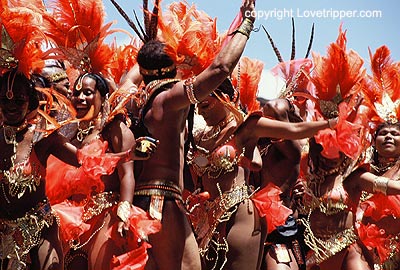
TRINIDAD CARNIVAL

Image Source: Lushnessofluminousliving.files.wordpress.com

Termed the greatest show on earth, Trinidad Carnival is officially an annual non-stop party that lasts for 2 days: Carnival Monday & Carnival Tuesday in the months of February/March, but Carnival Tuesday is the day everyone waits for. Thousands of masqueraders parade across the streets of the capital, Port of Spain, in full costume, dancing in a frenzy to our native music called soca (pronounced so-kah).  However, pre-Carnival celebrations begin as far back as Christmas. From Boxing Day till Carnival Sunday, there are ceaseless parties, cultural shows & carnival musical competitions. The Carnival season is an explosion of colour, creativity, music and celebrations; it’s a time to forget your troubles, shake off the stress and have a good time. Everyone is invited!


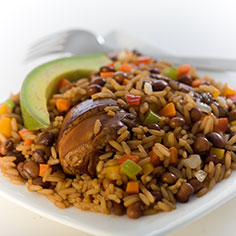
FOOD

Image Source: Lushnessofluminousliving.files.wordpress.com

From upscale expensive restaurants to small intimate family-run cafes, you will be spoilt for choice where Trinbagonian food is concerned. One can never go hungry in this gorgeous Caribbean island. Our African ancestors brought with them stews and one-pot meals that we call Creole Food such as pelau, macaroni pie, and beef soup made with succulent chunks of meat. Our East Indian ancestors also brought with them curry. Absolutely any kind of meat can be curried and curried foods are a big part of our food culture! But, thanks to the East Indians, the 2 delicacies that separate us from all other Caribbean islands are roti and doubles. Our rotis come in many different varieties and doubles is the unofficial national breakfast comprising of yellow lentil patties filled with spicy channa or chickpeas. Delish! Another  must-have is bake-and-shark ( deep fried pieces of shark served between 2 slices of fried bake or dough & served with a wide variety of condiments) – this is a necessity after a trip to the popular Maracas Beach. But there are soo many other types of foods to try.


ADVENTURE
 
Image Source: Lushnessofluminousliving.files.wordpress.com

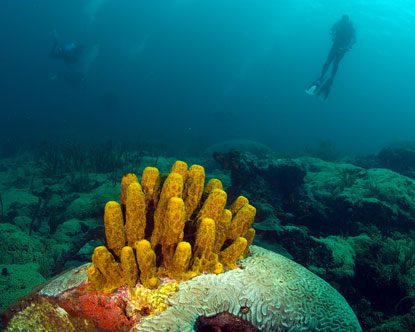
For the adventure seekers out there, we aren’t only about sandy beaches and blue seas, the options for adventure are paramount! For example, from relaxing walks through the Western Hemisphere’s oldest rainforest reserve to a challenging 6 hour trek though abandoned cocoa estates to a mountain lake, anything is possible for hikers in Tobago. The twin islands also have great bird watching sites. From the Caroni Swamp in Trinidad, protected home to the nation’s national bird, the Scarlet Ibis, to a small island called Little Tobago which is the protected habitat for all types of sea birds. Snorkelling & scuba diving are also great options for exploring and discovering Tobago’s remarkable coral gardens and coral reefs.

Image Source: Lushnessofluminousliving.files.wordpress.com

Tobago’s coastal waters are comprised of approximately 300 different species of coral including staghorn, fire coral and elkhorn. There are also a broad range of reefs, rock pillars and gardens filled with sea creatures.  Popular marine areas in Tobago such as the Buccoo Reef, Nylon Pool and Speyside Reefs offer these amazing experiences. Mountain biking, turtle watching, kayaking and goat racing are also other types of fun activities adventure seekers can try.


THE BEACH

Image Source: Lushnessofluminousliving.files.wordpress.com

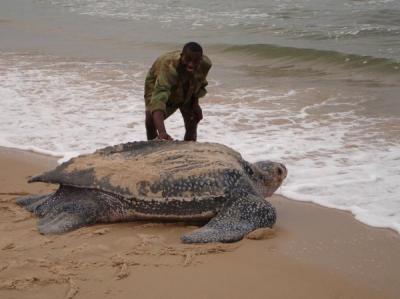
Although Trinidad is unlikely to come up among “top 10 Caribbean beaches” listings, it doesn’t mean that there aren’t many countless beaches and activities to fill in a day or weekend in Trinidad. The most popular beaches are on the North Coast; for example, Maracas Beach is the most popular beach in the north, with great food on offer and a range of facilities and amenities, and Blanchisseuse (pronounced Blanch-she-shares) is a popular weekend getaway with several hiking trails to the nearby waterfall, into the rainforest, and along the as-yet unpaved north coast. The Marianne River that flows into the bay is also great for kayaking. But dotted along the country’s coasts are other gorgeous beaches such as Grande Rivière, located in the northeast which is perfect for a weekend getaway, particularly if you like the outdoors.  Between March and August, it is the second largest leatherback turtle nesting ground in the world and is good for river bathing, kayaking and hikes into the forest. Mayaro in the south east has a glorious stretch of beach – the longest in the island – and is perfect for long walks, Vessigny Beach in the south isn’t the prettiest, but most weekends,  it becomes a venue for beach parties and excursions. And lastly, Columbus & Cedros Bays in the southwest are stunning in good weather. These pristine bays and quiet fishing villages have wonderful views of the south-western coast, and on clear days, of neighbouring Venezuela.

What’s not to love?!

More links to travel and tourism news and articles can be accessed at this Facebook page for John Jefferis.

Sunday, December 16, 2012

Escaping winter with Caribbean getaways


Why are the few months after the holidays a great time to hit the high seas? Some reasons may surprise many, but they make a lot of sense.

Image credit: cruisebrothers.com


Tom Parsons of Dallas News says that from the months of January to February leisure travel drops and during this slowdown, cruise and travel companies offer low rates. “Holiday, spring break, and summer cruises can cost you three times more than cruising during the slow season,” Parsons explains.

“January and February are good months to cruise, but so are September, October, and early November. After early March, rates soar for spring break; summer prices can be just as high,” he adds.

Samantha Bomkamp of the Huffington Post says that for airlines to fill empty seats, they have to run on discounted fare offers. However, travelers should know that tempting sale offers may still be expensive compared to other airlines. So travelers still need to search for the best possible offer there is. Bomkamp further notes that the slow season advantage doesn’t just end with cheap airfare; it’s also true with hotel rooms, car rentals, and tour packages. Add to those the benefit of fewer travelers, which means less crowded planes and booking time.

Caribbean’s tourist destinations

• Gordon Campbell Gray’s Carlisle Bay in Antigua

Image credit: littleluxuryislands.co.uk


• John Jefferis’s Coco Reef Resort in Bermuda

Image credit: cocoreefbermuda.com


• David Copperfield’s Musha Cay in the Bahamas

Of course, the pleasure of having any of these vacation spots to themselves is the climax of the slow season advantage to the chance-takers.

Get updates about Caribbean destinations from this Twitter page.